
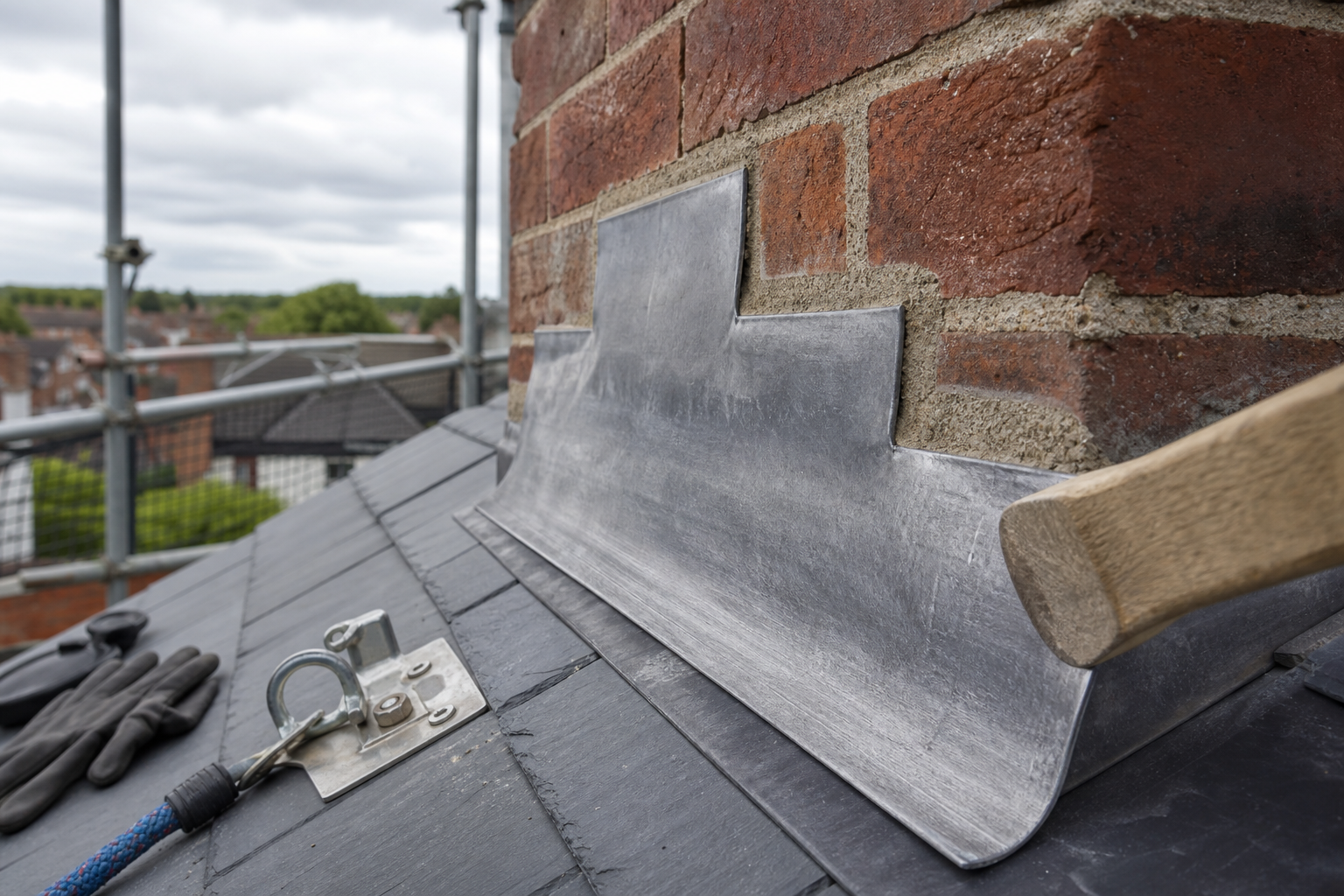
Why our flashing repairs stay focused
Leak path checked fully
We inspect nearby roof parts as well as the lead to avoid treating the wrong fault.
Patch or replace advice
We explain when a local repair will work and when wider failure needs more.
Watertight finishing matters
Reforming, fixing and pointing are handled with long term sealing in mind.
Flashing faults can keep leaks coming back
Lead flashing is there to keep water out where the roof meets another surface. Around chimneys, walls, valleys, dormers and roof penetrations, it acts as an essential seal at the points most likely to move or wear over time. When flashing splits, lifts, cracks or pulls away, the leak can look like a tile or slate issue even when the coverings are sound. We inspect the surrounding area carefully so the true fault is identified before work starts.
With Weather Struck Roofing, homeowners in Alcester get practical advice on whether the problem needs a local repair, refixing or wider replacement. That matters because simply sealing over a leak often ignores the underlying movement, fatigue or poor detailing that caused it.
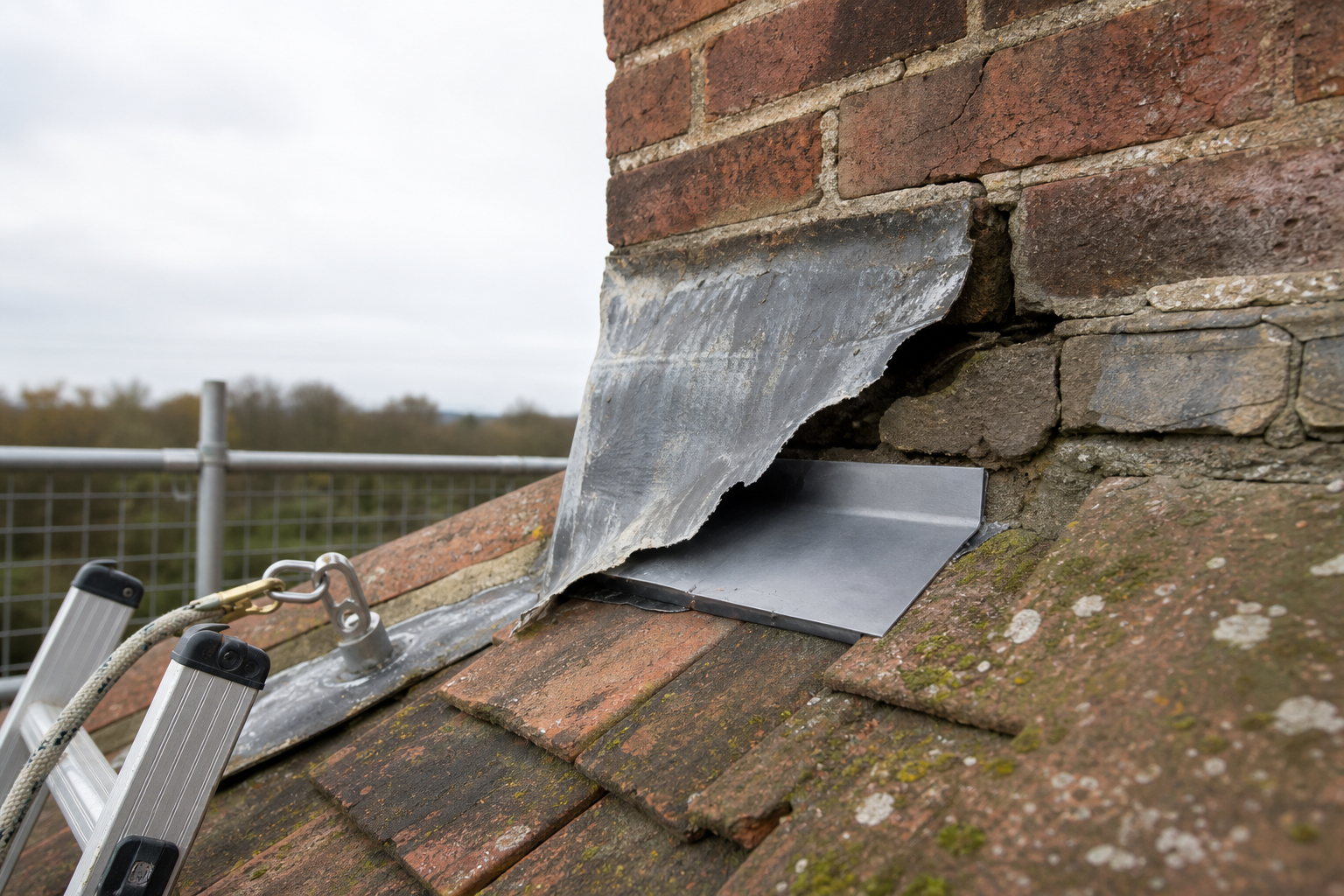
Repairs planned around the full leak path
A proper flashing repair begins with safe access and a clear understanding of how water is travelling through the area. We look at the flashing itself, the nearby roof coverings, the chase or pointing and the condition of the structure beneath. Depending on what we find, the job may involve refixing loose sections, replacing damaged lead, reforming steps or repointing the chase to leave a watertight finish.
With Weather Struck Roofing, you get honest guidance on whether a local patch is enough or whether a more reliable replacement is the better route. That clear diagnosis helps stop repeated call-outs for the same stubborn leak.
Frequently asked questions
How do I know if lead flashing is causing the leak?
Persistent leaks around chimneys, walls, valleys or roof penetrations can all point to flashing trouble, especially if the coverings nearby look broadly intact. We inspect the lead and adjacent roof elements together because the visible wet area inside rarely tells the whole story on its own.
Can lead flashing be repaired without replacing all of it?
Yes, if the problem is limited to a smaller section or a loose detail, a local repair may be appropriate. When the lead is cracked across larger areas, badly installed or repeatedly failing, replacement often gives a more dependable result and we explain the reasons clearly.
Do you check tiles and pointing around the flashing too?
Yes, because flashing faults often sit alongside problems in the surrounding tiles, slates or mortar joints. We look at how the whole junction is working before we advise on repair, which helps us target the real source of the leak instead of treating only the most obvious symptom.